550 Years at One Estate
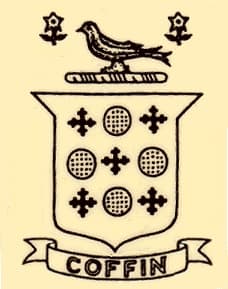
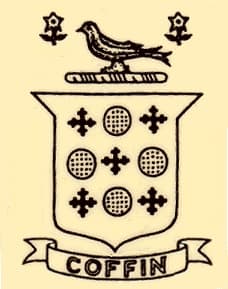
Coffin family coat of arms

The Portledge Centuries

Devon, England · 1066 – 1620

Before any Coffin crossed the Atlantic, the family held one estate in Devon for over five hundred years. From a general at Hastings to a farmer who sailed for New England, this is the medieval line — fourteen generations at the Manor of Alwington before the world changed.

Note on sources: The connection from Sir Richard Coffin (1066) to Richard Coffyn (~1280) is based on traditional Coffin family genealogy, not generation-by-generation documentation. The verified direct line begins with Tristram Coffin (1609) and is confirmed through FamilySearch. This page presents the traditional medieval line as context, not as proven fact.

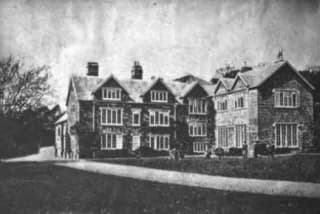
Portledge

Portledge House, Alwington, Devon — overlooking the Bristol Channel

Portledge House, Alwington, Devon — overlooking the Bristol Channel.

Portledge Manor sits in the parish of Alwington, Devon, England. The estate overlooks the Bristol Channel. The Coffin family held this land from the time of the Norman Conquest— over five hundred years of continuous occupation at one estate before a Coffin ever crossed the Atlantic.

The name “Coffin” derives from the Norman French, likely arriving with William the Conqueror’s forces or shortly after the Battle of Hastings in 1066. The spelling varied over centuries: Coffyn, Colvin, Corvin, Cophen. The family’s estate in Normandy was at Courtition, near Falaise — twenty miles south of Caen — and remained in Coffin hands until 1796.

1066
The Conquest
Reign of William I · The Norman Invasion
The Battle of Hastings, 1066 — Norman cavalry charges the Saxon shield wall

The Battle of Hastings, October 14, 1066.

Sir Richard Coffin
General in the Army of William the Conqueror
Fought at the Battle of Hastings during the Norman invasion of England. For his service, William granted him the estate of the Manor of Alwington, a few miles from Bideford in southwestern Devon. His family's estate in Normandy was at Courtition, near Falaise — twenty miles south of Caen. The Normandy estate remained in Coffin hands until 1796.
Norman Conquest

The Coffin name appears in William’s Domesday Book (1086) as current inhabitants of England — suggesting some Coffins may have crossed from France even before the Conquest. By 1252, the name in its various forms (Colvin, Corvin, Cophen, Coffyn) appears frequently in records across Somerset, Dorset, Wiltshire, and Cornwall.

The name is disputed: Welsh “Coffyn” meaning hilltop boundary; Old French “coffin” meaning basket (a basket-maker’s name); or most likely from “coffer” — a treasure box.
1154–1272
The Plantagenet Coffins
Reigns of Henry II through Henry III

The family consolidated its position in Devon across the reigns of the Plantagenet kings. Records name Sir Richard Coffin under Henry II (1154–1189), Sir Elias Coffin under King John (1199–1216), and Sir Jeffrey Coffin and Combe Coffin under Henry III (1216–1272). The manor at Alwington passed from father to son.

~1280
Generation One
The direct line begins
Richard Coffyn
b. ~1280 · Alwington, Devon
The earliest ancestor in the direct line from Hastings to Nantucket. While the medieval connection to Sir Richard of 1066 is traditional rather than documented generation by generation, the family's continuous presence at Alwington from the Conquest forward is established in records.
1301–1427
Generations Two through Five
The Hundred Years War era · Black Death 1348
John Coffyn
b. ~1301 · Alwington
Son of Richard.
David Coffyn
b. ~1332 · Alwington
Married Thomasin (~1361). Died after 1370. Lived through the Black Death, which killed roughly half of Devon's population.
David Coffyn
b. ~1361 · Alwington
Born in the generation after the plague.
John Coffyn
b. ~1392 · d. 1427 · Alwington
Married Thomasin Hartley, 1406.

Through the catastrophes of the fourteenth century — the Great Famine, the Black Death, the Peasants’ Revolt, the Hundred Years War — the Coffins held Alwington. The estate survived because the land survived. Devon was far enough from London to avoid the worst political turmoil, close enough to the sea to sustain itself.

1420–1496
Generations Six and Seven
Wars of the Roses · The Portledge Branch
Portledge House, Alwington, Devon — seat of the Coffin family

Portledge House, Alwington, Devon — seat of the Coffin family for centuries.

William Coffyn
b. ~1420 · d. September 11, 1486 · Alwington
Married Margaret Cockworthy Giffard (~1453). Died the year after the Battle of Bosworth Field ended the Wars of the Roses and brought the Tudors to power.
Richard Coffyn
b. ~1425 · Portledge, Devon
Married Alice Gambon (daughter of John Gambon), 1462, at Merston, Shropshire. The Portledge branch — the ancient manor house “which in part has existed for centuries” and became the seat of the Devon Coffins.
1450–1566
Generation Eight
Early Tudor Era
John Coffyn
b. ~1450 · d. December 15, 1566 · Portledge, Devon
Married Phillippa Elizabeth Hingston (daughter of Philip Hingston), 1496. Lived to see the entire reign of Henry VIII and the English Reformation.
1475–1555
Generation Nine
Reign of Henry VIII · The English Reformation
Richard Coffyn
b. ~1475 · d. December 24, 1555 · Alwington
Married Wilmont Chudleigh (daughter of Sir Richard Chudleigh) at Merifield, Cornwall, 1510. Through the Chudleighs, the Coffins connected to the Wadham family — Sir Nicholas Wadham's descendants would found Wadham College, Oxford.
Richard’s era was the peak of Coffin prominence in England. His kinsman Sir William Coffin served as Sheriff of Devonshire and Master of the Horse for Queen Anne Boleyn’s coronation — one of only 18 men who accompanied Henry VIII to a tournament in France. When Sir William died, he left his prize hawks and horses to the King himself.
1514–1613
Generations Ten and Eleven
Elizabethan Era · The Spanish Armada 1588
James Coffyn
b. 1514 · d. December 15, 1566 · Portledge
Married Mary Cole (1534).
Peter Coffin
b. 1535 · d. October 8, 1613 · Portledge
Married Mary Boscawen (daughter of Hugh Boscawen and Phillippa Carminowe), 1560. Through the Boscawens — a powerful Cornish family — the Coffins connected to some of the oldest families in southwestern England. Peter's sons would split: Nicholas stayed at Portledge, and Nicholas's son Tristram would cross the Atlantic.

Peter Coffin lived through the reign of Elizabeth I, the defeat of the Spanish Armada, the founding of the East India Company, and Shakespeare’s entire career. He died the year before Pocahontas arrived in England. His grandchildren would be the ones to leave.

1560–1613
Generation Twelve — The Last at Portledge
James I · Early Stuart Era · Jamestown 1607
Nicholas Coffin
b. 1560 · d. 1613 · Brixton, Devon
Married Joan Advant (1580). Joan was the daughter of John Advant and Anne Seymour — through Anne, the Coffins connected to the Seymour family: Sir Edward Seymour, 1st Duke of Somerset, Lord Protector of England during Edward VI's minority. Seven children, including Peter (the emigrant's father) and a second Tristram who died young.
Connected to the Seymours
1584–1628
Generation Thirteen — The Bridge
The Great Migration begins · Plymouth Colony 1620
Peter Coffin
b. 1584 · d. 1628 · Brixton, Devon
Married Joan Kember (daughter of Robert Kember), 1604, at Brixton. His will, proved March 13, 1628, left land to Joan during her lifetime, then to “his son and heir Tristam, who is to be provided for according to his degree and calling.” Also named son John, daughters Joan, Deborah, Eunice, and Mary, and a tenement in Butlers parish called Silverhay.

Peter died before his most famous son was grown. Joan Kember Coffin survived her husband by 33 years, eventually crossing the Atlantic herself. She died in Boston in May 1661. The Reverend Mr. Wilson preached her funeral sermon, speaking of her as “a woman of remarkable character.”

Peter’s will is the bridge document — the last record in England before the family’s American story begins. “Tristam, who is to be provided for according to his degree and calling.” That calling took him to Nantucket.
1609–1681
Generation Fourteen — The Crossing
Plymouth, Devon → Salisbury, MA → Nantucket, 1659
Tristram Coffin
b. 1609, Plymouth, Devon · d. October 2, 1681, Nantucket
Married Dionis Stevens. Emigrated to New England ~1642. Settled first at Salisbury, Massachusetts, then Haverhill, then Newbury. In 1659, he led the purchase of Nantucket Island with eight other proprietors — Thomas Macy, Thomas Mayhew, and others. Became the chief magistrate. Father of seven children, grandfather of seventy-five. “Grandfather of almost all of us,” as Zaccheus Macy later wrote.
Nantucket Founder
Tristram Coffin medallion portrait

Tristram Coffin (1609–1681). Medallion portrait.

Tristram Coffin homestead marker, Nantucket

The Tristram Coffin homestead marker, Nantucket.

From a Norman general at Hastings to an island patriarch off Cape Cod — fourteen generations, 550 years at the same estate in Devon, then one crossing that changed everything. The Coffin line didn’t just arrive in America. It had been preparing for six centuries.

The Direct Line

Hand-drawn Coffin family tree illustration showing the lineage from Devon to Nantucket

Hand-drawn Coffin family tree illustration.

Sir Richard Coffin
1066 · Hastings → Alwington, Devon
~200 years at Alwington
Traditional connection, not generation-by-generation documented
Richard Coffyn
~1280 · Gen 1 of direct line
John Coffyn
~1301
David Coffyn
~1332 · m. Thomasin
David Coffyn
~1361
John Coffyn
~1392–1427 · m. Thomasin Hartley
William Coffyn
~1420–1486 · m. Margaret Giffard
Richard Coffyn
~1425 · Portledge · m. Alice Gambon
John Coffyn
~1450–1566 · m. Phillippa Hingston
Richard Coffyn
~1475–1555 · m. Wilmont Chudleigh
James Coffyn
1514–1566 · m. Mary Cole
Peter Coffin
1535–1613 · m. Mary Boscawen
Nicholas Coffin
1560–1613 · m. Joan Advant (Seymour connection)
Peter Coffin
1584–1628 · m. Joan Kember · The Bridge
Tristram Coffin
1609–1681 · Devon → Nantucket · m. Dionis Stevens

“Tristram Coffin — grandfather of almost all of us.”

— Zaccheus Macy, Nantucket, 18th century

Historical Context

What the Coffins Lived Through

1066Battle of Hastings. Norman Conquest of England.

1215Magna Carta signed.

1337–1453Hundred Years War with France.

1348Black Death reaches Devon. Half the population dies.

1455–1487Wars of the Roses.

1509–1547Henry VIII. Sir William Coffin serves as Master of the Horse.

1534English Reformation. Break with Rome.

1588Spanish Armada defeated.

1607Jamestown founded.

1620Mayflower sails. Four of your ancestors aboard.

1628Peter Coffin dies. Leaves land to “his son and heir Tristam.”

1659Tristram Coffin purchases Nantucket.

The Coat of Arms

Coffin family coat of arms — heraldic shield

The Coffin coat of arms dates from the family’s centuries at Portledge. The heraldic record reflects their Norman origins and long tenure as Devon gentry. The arms were borne by the Coffins of Portledge, Alwington, and their cadet branches across southwestern England.

Sir William Coffin, kinsman to the Portledge line, served as Sheriff of Devonshire under Henry VIII and Master of the Horse for Queen Anne Boleyn’s coronation — one of only 18 men who accompanied the King to a tournament in France. When Sir William died, he left his prize hawks and horses to the King himself.

Tristram’s Departure

After more than 500 years at Portledge, Tristram Coffin left England around 1642. He settled first in Salisbury, Massachusetts, then Haverhill, then Newbury. Within 17 years of leaving Devon he had purchased an island — leading the acquisition of Nantucket in 1659 with eight other proprietors.

550 years at one estate. Then an island.

Portledge Today

Portledge House still stands in Alwington, Devon. It is now a private estate. The building visible today dates primarily from later centuries but occupies the same site the Coffin family held for over 500 years. The family’s Normandy estate at Courtition, near Falaise, remained in Coffin hands until 1796 — giving the family a continuous presence on both sides of the English Channel for seven centuries.

Sources: Parkman Genealogy, Barney Genealogical Record (NHA), FamilySearch.
550 years at one estate. Then an island.