The Researcher
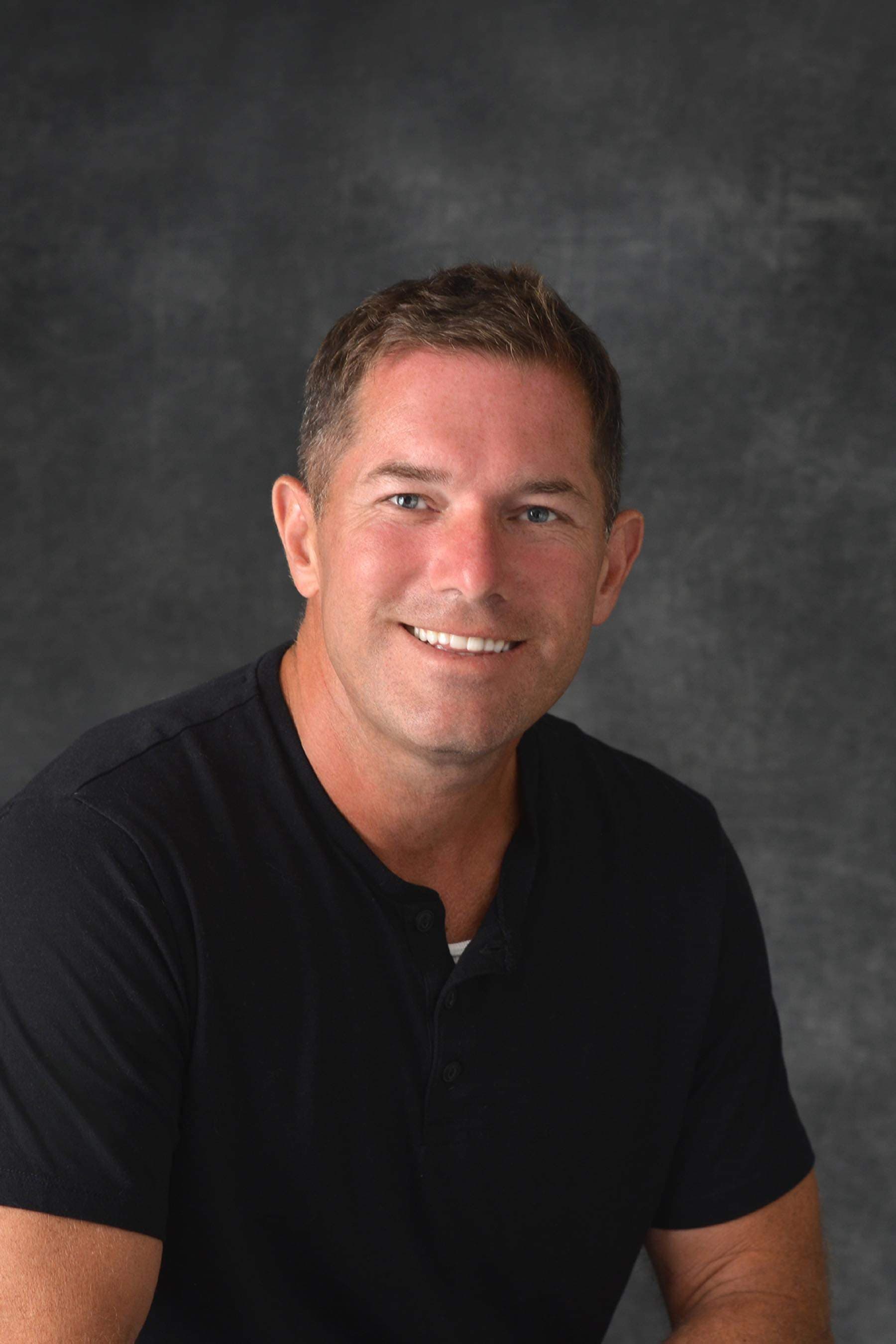
John Long, keeper of this archive.
What drives it is how I think, in patterns, recursively, persistently. That comes partly from being born different enough to spend fifty years reading rooms carefully, and partly from a father who taught me to keep going when others said you couldn’t.
The archive started because the records needed someone to keep them, and to make truth easier to prove.
Education
Trained in information architecture, with degrees from Salve Regina (philosophy and information systems), Roger Williams (public administration), and doctoral work at the University of Massachusetts Dartmouth. The part that matters here is methodological: the principles of hierarchical structure and source prioritization, learned from Richard Saul Wurman and Barbara Minto, are the same ones that organize this archive.
Why This Archive Exists
Somewhere in a box of old photographs, a woman nobody alive can name picked up a pen and started writing.
“My father Le Roy W. Swift.” “My Mother’s mother. Elizabeth Arden.” “Mama she was so pretty.” “Many many years ago when I was very little.”
She is called the Annotator here. Probably Papa’s daughter, a child of Le Roy Warren Swift and a woman from the Winter family of New Bedford. She sat down with 49 photographs, some dating to the 1850s, and labeled them in blue ink from memory. Without her, these are anonymous faces in velvet cases. With her, they are nine generations of a family whose documented line stretches from the founders of Nantucket to a homestead in Waquoit.
She had no archives to consult, no databases to query. She had a pen, her memory, and the knowledge that if she did not write it down, nobody would.
This archive exists to finish what she started.
The complexity was overwhelming from the beginning. Nineteen family lines across four centuries. Mayflower passengers and Nantucket whalers. Officers wounded at Bunker Hill and Loyalists who cut down the Liberty Tree. A cousin who negotiated the alliance that won the Revolution and a cousin once named for the redesigned ten dollar bill, a redesign ultimately shelved. All connected. All documented. All at risk of being forgotten.
The documented depth reaches back to the founding generations of colonial New England, the founders of Nantucket, four Mayflower passengers documented in the Mayflower Families genealogies, and Stukely Westcott of Warwick, Rhode Island, whose own line is laid out on the Westcott of Warwick line page. Each line is sourced and tiered by confidence; where the evidence runs out, the archive says so rather than papering over the gap.
The work here follows the principles of information architecture: systems, verification, structure. Every ancestor link is cross-referenced against primary genealogical records. Every claim carries a confidence rating. Primary sources come first. When something is uncertain, the archive says so. When something is wrong, it gets corrected publicly. The standard is simple: lead with what was found, not what is claimed.
About This Audit
In 2026 the archive was audited end to end. Every FamilySearch PID was resolved against the FamilySearch Family Tree (a collaborative wiki tree), and every parent-child link was checked for sources on the relationship itself, not just on the people it connects. The audit confirmed that the family’s people are well documented, but that the links between them are largely tree assertions rather than separately sourced conclusions; the site now tiers each edge accordingly, including a new FS-Tree-Only tier for that case.
The audit also examined the archive’s deepest claim, a royal descent through Stukely Westcott to the Plantagenet kings. Ten independent sources spanning 1886 to 2026 conclude that the splice between Westcott and his alleged English ancestors is not documented, so that descent has been relocated to the archive Basement as labeled family tradition, not presented as fact on the main site. The accepted gateways that remain are four Mayflower passengers documented in the Mayflower Families genealogies.
Where an edge is not yet documented beyond FamilySearch, the archive says so out loud: a public roadmap (audit/04-edge-sourcing.md) lists every FS-Tree-Only parent-child link still to be sourced from records and published genealogies, with the candidate sources to consult for each family line. Gaps are visible, not hidden.
The full audit report and machine-readable verification data are kept in the archive’s records (audit/00-audit-report.md,02-fs-verification.json, 03-gateway-crossref.json,04-edge-sourcing.md). This is what “lead with what was found” looks like in practice.
The real reason this exists is simpler than methodology, though. The Annotator saved these photographs because she understood something this project is only now catching up to: the story does not survive on its own. Someone has to choose to tell it. Someone has to sit down with the evidence and do the work before the people who remember are gone and the photographs fade and the names become just names.
The intention is to keep building, keep verifying, keep documenting what the Annotator preserved. Her name is still unknown. Anyone who recognizes her handwriting, or knows the children of Le Roy Warren Swift of New Bedford, can reach the archive through the contact form below.
Four Generations of John Long
- John Long. Ireland, ~1835. Crossed the Atlantic. Built a life in Fall River.
- John J. Long. Massachusetts State Representative, 1956-1980. Ran an insurance agency across the state line while serving 24 years in the State House.
- John P. Long. Attorney. Put himself through law school at night while raising three sons and working days. Practiced for over forty years.
- John F. Long. The researcher. Built this archive.
Same name. Different middle initials. Different men. Same persistence.
This archive is, in part, an answer to a question the fourth John Long started asking after the third one died: what endures?
The Record-Keepers
This family has always kept the records.
The Ó Dálaigh: the Daley line, through Susanna Daley, Rep. Long’s mother, were poets and record-keepers for Irish chieftains, generation after generation. For centuries, their role was to document lineage, preserve history, and maintain the institutional memory of the clan. Without the Daleys, the chieftains had no proof of who they were.
Peter Folger kept records on Nantucket: translating, interpreting, and documenting the island’s earliest dealings between English settlers and Wampanoag. Tristram Coffin served as chief magistrate, the man responsible for order and documentation in the colony. Rep. John J. Long wrote legislation for 24 years in the Massachusetts State House, institutional memory in the form of law. The Annotator sat down with a pen and labeled 49 photographs from memory so the faces would not become anonymous.
This archive is not a new idea. It is the continuation of something this family has been doing for a thousand years: on both sides of the Atlantic, in different languages, with different tools, but always the same impulse: write it down before it disappears.
Methodology
How this archive is built:
Primary Sources Prioritized
Photographs, vital records, military muster rolls, published volumes (Massachusetts Soldiers and Sailors of the Revolutionary War), census data, and the Barney Genealogical Record (Nantucket Historical Association).
Inherited Physical Evidence
Photographs, period-labeled portraits, family papers, and heirlooms held in the family archive with attribution are primary-source documentation. An inherited ambrotype with a period ink label is not a photograph of a record, it is the record.
Published Genealogies
Referenced but independently verified where possible. Published genealogies are treated as leads, not conclusions.
Oral History
Documented but clearly marked. Family tradition is preserved as context, not presented as established fact.
For a complete list of sources used across the archive, see the Sources & References page.
Confidence Ratings
Every connection in this archive is rated for confidence. These ratings appear throughout the site as colored indicators on ancestor tables, family line pages, and history pages.
Verified
Primary source confirmed. Primary source documentation supports the connection. The highest level of confidence in this archive.
Inherited Evidence
Documented through direct inherited physical evidence: photograph, period-labeled portrait, family paper, or heirloom with attribution. Primary-source status, equal in standing to Verified, the two tiers differ only in the type of primary source.
Sourced
Documented in published records, genealogies, or historical volumes, but not independently verified against primary sources. Strong evidence, pending final confirmation.
Traditional
Based on oral history, published family genealogy, or family tradition without primary source verification. Presented as context, not as proven fact.
Research in Progress
Active investigation, not yet confirmed. These items are flagged for follow-up and may be upgraded or removed as research continues.
Current Research
Active projects as of 9 April 2026
The Annotator→
Identification of the blue ink writer who labeled 49 family photographs decades after they were taken. She was the child of “Mama” and “Papa” and the grandchild of Richmond C. Winter. Her handwriting is on every photo; her name is not.
Carol Oral History
Recording and preserving oral history from living family members. First-person accounts of places, people, and stories that exist nowhere else.
Carol Oral History
On 9 April 2026 John Long recorded an oral history with Carol Perry Long, a granddaughter of Rachel Winter Swift. It answered the collection’s oldest question. The labels speak in Rachel Winter Swift’s voice. Carol remembers a family member writing on the backs of the photos years ago, probably as Rachel told her. “Grandpa Wall ?” was written for a later generation [00:50–01:10]. The labels are read in The Annotator’s Album.
The interview identified several photographs: Herbert Miller Wall as “Grandpa Wall”; Col. Charles F. Perry Jr. on a rooftop, probably in Boston; probably Francis Swift Perry on a tank in the Second World War; the Swift family land near Waquoit, in Falmouth; and the Fall River yard of Fanny P. Harrison Winter. It also kept two family memories: Rachel said her husband, Charles F. Perry Jr., built the Huttleston in Fairhaven, and Francis Swift Perry became a cotton broker after the war and moved the family to Houston, Texas, in the early 1950s.
Everything taken from the interview is cited as “Family recollection (oral history, Carol Perry Long, recorded 9 April 2026)” and is marked as family memory, apart from what the records show. Where a record can confirm or correct a memory, the search for it continues.
Acknowledgments
Research contributions from Annemarie Long Gonet, the youngest of the Long siblings and a vital source for this archive.
Contact
Anyone who recognizes names, places, or photographs in this archive, or has information that could help the research, is invited to write.
Note from the Steward
The Long Family Archive is maintained by John Francis Long, present steward.
The archive is the steward’s schole, the Aristotelian term for the time required to think well, contemplate, and pursue understanding. I write about schole and its uneven historical distribution at johnlong.io. The archive is where I exercise it, directed at one specific question: who were the people I come from, and what does that mean for who I am, where I am going, and what carries forward.
The inquiry has three parts. Who am I, as an individual and as a member of this family. Where have I come from, across the documented generations behind me and the undocumented ones beyond. Where am I going, watched against the patterns of those who came before. The archive holds the historical record; the family’s living generations supply the present-day data. Both are the same inquiry on different time horizons.
The steward’s work is part scholarship and part pattern recognition. Each generation across the archive carries some traits, drops others, surfaces new ones. Some patterns are significant; some are uninteresting; some are funny, odd, or fascinating. Documenting them with the audit framework’s rigor makes them legible: to today’s readers and to the family’s descendants who have not yet been born.
That is the archive’s intended life. An institutional record, kept with patience, built so that the inquiry continues after the present steward is gone.

Maintained by John Francis Long, present steward.